What the Bromo Tengger Semeru Community Model Teaches Us About Shared Responsibility
No destination succeeds alone.
Behind every well-managed tourism experience is a network of people and institutions working towards the same goal. Communities protect traditions. Governments provide direction. Tourism businesses connect markets. Educators develop skills. Conservation organisations safeguard natural assets. Together, they create the conditions that allow tourism to thrive responsibly.
Around the Bromo Tengger Semeru landscape in East Java, this partnership can be seen every day. Beyond the famous sunrise lies a destination shaped by Tengger cultural communities, local enterprises and collaborative management—offering an important lesson for the future of regenerative tourism in Indonesia.
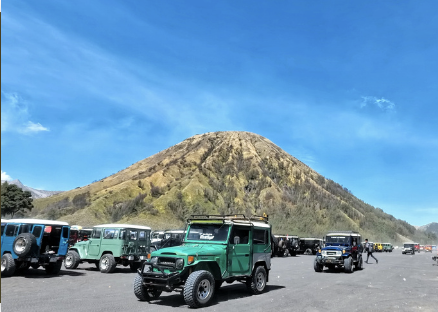
The dramatic landscape of Mount Bromo has become one of Indonesia’s most recognisable travel icons. Every morning, thousands of visitors gather before sunrise, creating one of the country’s most photographed experiences.
Yet the real story begins long before the first jeep climbs the mountain.
Behind the visitor experience are Tengger communities whose cultural traditions have shaped this landscape for generations. Local jeep operators coordinate access across challenging terrain. Community-owned homestays welcome travellers throughout the year. Local guides interpret the volcanic landscape while sharing the beliefs, ceremonies and history that continue to define Tengger identity. Village enterprises, farmers and small businesses all contribute to an economy closely connected to tourism.
Managing a destination of this scale, however, requires much more than community commitment alone.
Visitor flows must be carefully managed to protect fragile environments. Conservation priorities must be balanced with growing demand. Infrastructure requires investment. Safety standards need continuous improvement. Tourism businesses depend upon reliable transport, professional services and responsible marketing. Education and training help prepare future generations to become guides, entrepreneurs and destination managers.
This is where regenerative tourism becomes a shared responsibility rather than a community expectation.
Successful destinations are built through partnerships that recognise the contribution of every stakeholder. Governments establish policies and invest in infrastructure. Protected-area managers safeguard natural resources. Educational institutions strengthen local capacity. Tourism businesses create market access. Communities preserve culture and provide authentic experiences. International buyers bring visitors whose choices support local livelihoods.
For the 13th Bali & Beyond Travel Fair (BBTF) 2027, this collaborative approach lies at the heart of regenerative travel. Tourism is strongest when every partner understands that protecting a destination is not someone else’s responsibility—it is a shared commitment that ensures the landscape, its culture and its communities continue to flourish together.
ASITA Bali Region believes meaningful tourism grows through partnership. BBTF 2027 continues bringing together government, communities, businesses and international markets to strengthen destinations that prosper through shared responsibility.
“The future of tourism will not be built by one institution or one community. It will be built by partnerships strong enough to protect what no single partner could protect alone.”
— I Putu Winastra, S.AB., M.A.P., Chairman of BBTF 2026 and Chairman of ASITA Bali